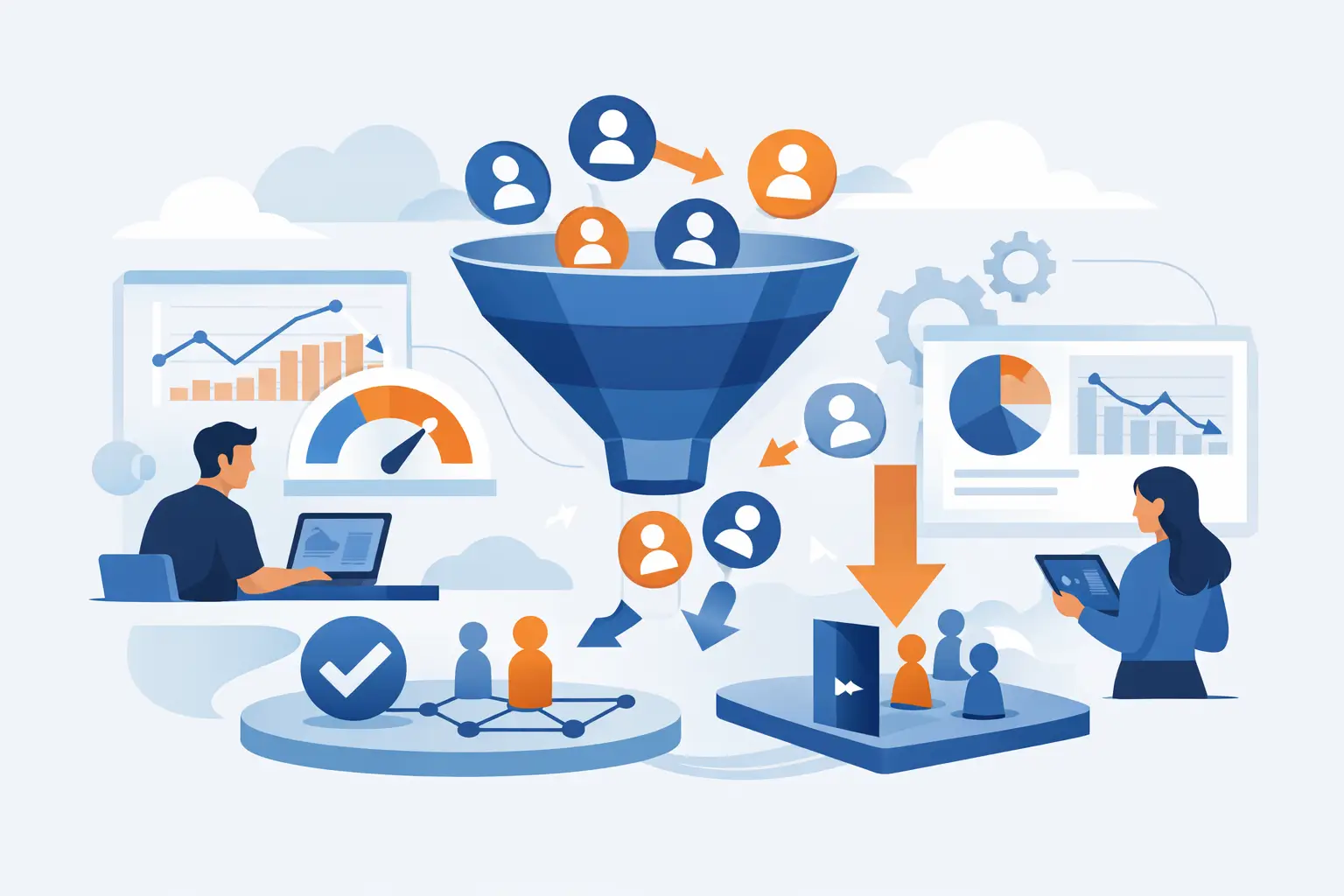
If your team still finds churn risk in a QBR deck, a renewal call, or a gut-feel Slack thread, you do not have a retention system. You have a delay problem. Churn prediction software for SaaS exists to fix that - not with more dashboards, but with earlier signals, sharper prioritization, and fewer missed saves.
Most SaaS teams do not lose customers because nobody cared. They lose them because the warning signs showed up across too many places, too late, and without any clear ranking of what mattered. Product usage dipped. Support tickets changed tone. Admin engagement dropped. Champions went quiet. The account looked "fine" until it did not renew.
That is the gap the right software closes.
What churn prediction software for SaaS should actually do
A lot of vendors sell retention intelligence like it is a reporting problem. It is not. The job is not to create another layer of charts for customer success to stare at. The job is to tell your team which accounts are moving toward churn, why that risk is rising, and where to act first.
Good churn prediction software for SaaS pulls together behavioral, product, commercial, and engagement data into one view of account health. It tracks patterns over time, not just snapshots. That matters because churn rarely comes from one event. It comes from a trend line - slower adoption, falling usage depth, fewer active users, weaker stakeholder engagement, delayed outcomes, or support friction that never gets fully resolved.
The software should also do more than label an account red, yellow, or green. Basic health scoring has been around for years, and a lot of it is still glorified spreadsheet logic. A modern system should identify risk earlier, explain the drivers, and help teams focus limited time where it can change renewal outcomes.
Why most retention processes break at scale
At 20 accounts, a strong customer success manager can hold most of the book in their head. At 200 or 2,000 accounts, that breaks fast.
This is where teams start patching together manual reviews, spreadsheet scoring, CRM fields, product analytics exports, and internal notes. It works just enough to feel familiar and fails badly enough to cost revenue. The bigger issue is not only labor. It is inconsistency. Different CSMs weigh risk differently. Different segments behave differently. And by the time leadership gets a clean picture, the accounts that needed attention weeks ago are already sliding.
That is why churn prediction software matters most for lean SaaS teams. If you cannot add headcount every time your customer base grows, you need a system that can watch the whole portfolio continuously. Not quarterly. Not when someone remembers. Continuously.
The signals that matter most
The best platforms do not pretend every account churns for the same reason. A startup customer on a month-to-month plan behaves differently from an enterprise account in a long implementation cycle. That said, the most useful systems tend to watch the same categories of evidence.
Product usage is the obvious one, but raw usage alone is a blunt instrument. You want trend quality, not vanity counts. Are core workflows being completed? Are power users still active? Has adoption expanded across the team or concentrated around one user who might leave?
Engagement signals matter just as much. A drop in executive participation, fewer replies from the main champion, or lower meeting attendance can signal risk before usage fully collapses. Commercial context matters too. Accounts with unresolved support issues, delayed onboarding milestones, poor time-to-value, or underused seats often tell a clearer churn story than a single product metric.
The point is not to collect hundreds of signals for the sake of it. The point is to combine them in a way that surfaces real risk without turning your team into full-time analysts.
What separates useful software from bloated software
This is where the category gets messy. Plenty of tools promise predictive churn intelligence and then deliver a giant implementation project, a confusing rules engine, and enough dashboard clutter to create a second job.
That is not a software win. That is operational drag dressed up as sophistication.
Useful churn prediction software gets to value fast. It connects to the systems you already use, builds account visibility quickly, and starts identifying risk without months of consulting or admin work. It should be easy for leadership to trust and easy for frontline teams to use daily.
That means a few things in practice. The risk model should be understandable. The account prioritization should be obvious. Alerts should be relevant, not noisy. And the outputs should help your team decide what to do next, not just confirm that a problem exists.
If a platform needs constant babysitting to stay useful, it is already losing the efficiency argument.
How to evaluate churn prediction software for SaaS
Start with speed. If implementation looks like a side project for your ops team, be careful. Most SaaS companies shopping for retention tooling do not need a six-month transformation. They need earlier visibility this quarter.
Next, look at data fit. The software should ingest product data, engagement signals, customer success activity, and commercial context without forcing your team into weird workarounds. If your data model is complex, flexibility matters. But flexibility should not come at the cost of usability.
Then look at explainability. A prediction is only useful if your team trusts it. If the system flags an account as high risk, can your CSM or leader immediately see why? Can they tie the risk to declining adoption, support friction, stakeholder inactivity, or a missed milestone? Black-box scores can look smart in a demo and fail in the real world if nobody acts on them.
You should also pressure-test prioritization. A good tool does not just identify risky accounts. It helps separate saveable risk from background noise. That matters because not every red account deserves the same level of intervention. Some need executive escalation. Some need training. Some are poor-fit customers you should stop over-serving.
Finally, look hard at total operating cost. Not just subscription price - the actual burden on your team. If the software requires heavy maintenance, endless tuning, or a dedicated admin, the ROI gets weaker fast.
Where teams get the biggest return
The most immediate win is usually account prioritization. Instead of running broad account reviews that treat every customer like a special case, teams can focus on the handful of accounts where action now can still change the outcome.
The second win is timing. Earlier detection gives customer success, sales, and leadership more room to intervene before renewal math hardens. A customer who has been drifting for 90 days is far easier to recover than one who shows up as a surprise non-renewal in the final month.
The third win is consistency. When risk scoring is centralized and data-backed, leadership gets a more reliable view of portfolio health. That improves forecasting, staffing, and renewal planning. It also reduces the dependence on tribal knowledge, which is a quiet but expensive problem in growing teams.
For expansion-minded teams, there is another upside. The same data used to detect churn can identify healthy accounts with growing usage, stronger engagement, and expansion potential. Good retention software should not only tell you who is slipping. It should also tell you who is ready for more.
The trade-offs to keep in mind
No software predicts churn with perfect certainty. If a vendor implies otherwise, that is marketing, not reality. Customer behavior changes. Data quality varies. Some accounts churn for reasons no model can see, like budget cuts or leadership turnover.
There is also a trade-off between customization and speed. Highly configurable platforms can fit edge cases better, but they often bring complexity with them. Simpler systems are faster to launch and easier to adopt, but they may not satisfy teams that want to control every scoring rule. What matters is whether the trade-off supports your actual operating model.
For most B2B SaaS teams, especially lean ones, the right answer is not maximum complexity. It is fast, credible signal detection that your team will actually use.
The smarter standard for retention tooling
The bar should be higher now. SaaS companies should not have to choose between blind reactivity and bloated enterprise software. They should be able to get clear churn visibility, predictive insight, and practical account prioritization without hiring a bigger team to manage the tool.
That is the appeal of platforms built around speed and action. Churn Assassin, for example, takes a direct stance against spreadsheet-driven health scoring and heavyweight customer success systems by focusing on fast setup, AI-driven risk detection, and clear account prioritization. That model fits how most SaaS teams actually operate - lean, fast-moving, and under pressure to improve renewals without adding drag.
If your retention motion still depends on manual review cycles and late-stage account surprises, the problem is not effort. It is visibility. The right software gives you back control before the renewal is already gone.
The best time to spot churn risk is when there is still enough runway to do something about it.