A renewal rarely blows up out of nowhere. Usually, the warning signs were there for weeks or months - product usage slipped, power users went quiet, support frustration went up, champions changed jobs, and no one connected the dots fast enough.
That is the real job of account health monitoring. Not producing another pretty score. Not giving your team more dashboards to ignore. It should tell you which accounts are stable, which are drifting, and which are on the path to churn while there is still time to do something about it.
For B2B SaaS teams, that distinction matters. If your health model only confirms what your CSM already suspects two weeks before renewal, it is too late. Good monitoring creates lead time. It helps you prioritize the right accounts earlier, run smarter interventions, and stop wasting time on low-signal reviews.
What account health monitoring should actually do
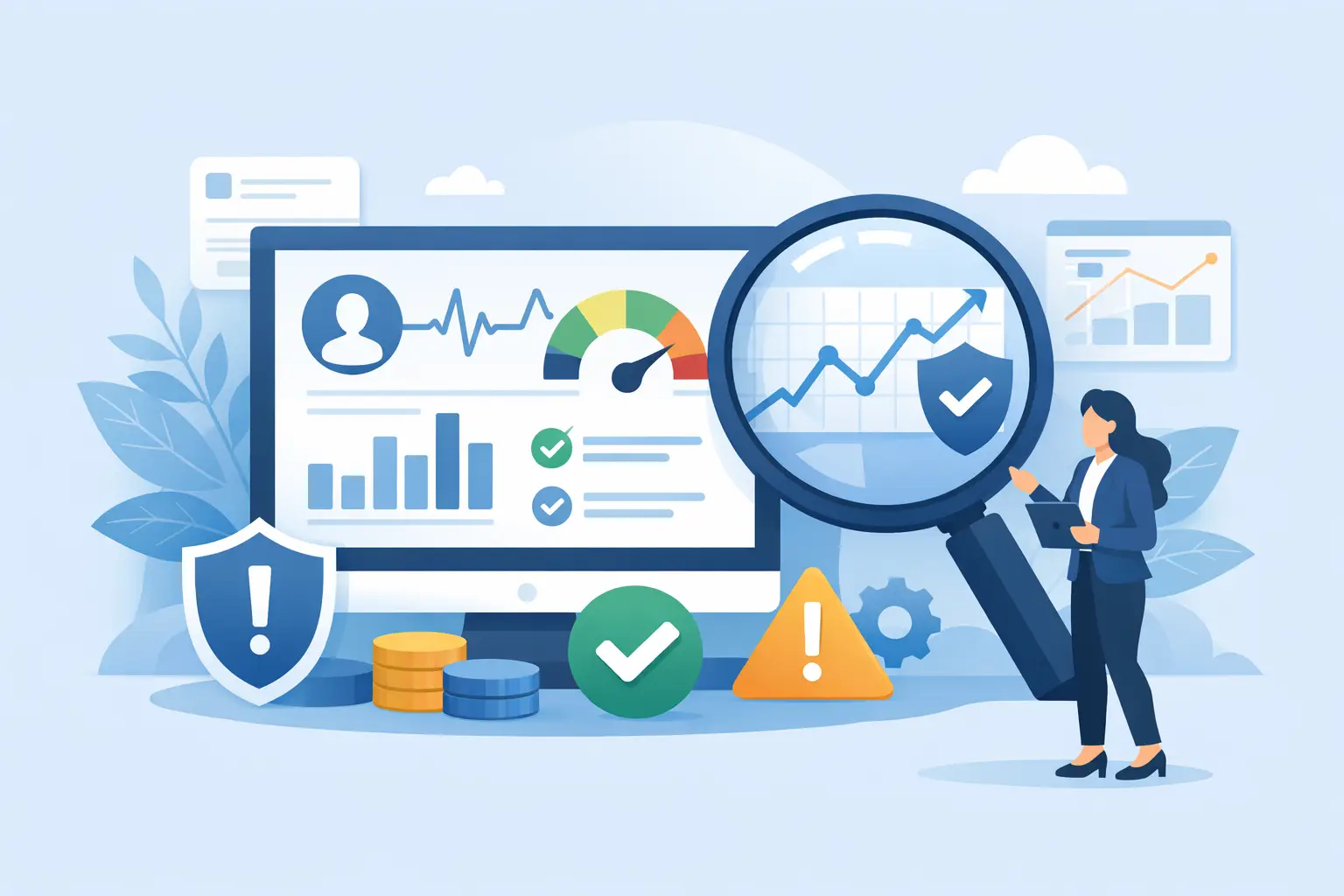
At its best, account health monitoring turns messy customer data into clear operating priorities. It pulls together behavior, engagement, support, commercial context, and trend changes so your team can see account risk in one place.
The keyword there is operating. This is not an academic exercise. A health system only matters if it changes action. Can your team see deteriorating accounts without pulling reports from five tools? Can leaders spot portfolio risk before the quarter gets ugly? Can customer success managers tell the difference between a temporarily quiet account and one that is actively disengaging?
A lot of teams think they have health monitoring because they have a red-yellow-green spreadsheet. That is not monitoring. That is manual bookkeeping with a delay built in.
Real monitoring is continuous. It updates as customer behavior changes. It weights signals based on what actually predicts retention in your business. And it gives your team enough confidence to act before churn becomes obvious to everyone.
Why most account health monitoring fails
The common failure is not a lack of data. SaaS teams have plenty of data. The problem is fragmented signals, inconsistent scoring, and too much manual interpretation.
One team tracks usage. Another tracks support tickets. Sales has renewal notes. Customer success has meeting history. Product has feature adoption trends. None of it rolls up cleanly, so account reviews turn into debates instead of decisions.
That is where bloated customer success software often makes things worse. You get more fields, more admin work, more dashboards, and more process drag. But you still do not get a reliable answer to a simple question: which accounts need attention right now?
There is also a timing problem. Many health programs are built around static account reviews, monthly check-ins, or manager intuition. Those methods can catch obvious issues, but they miss early movement. By the time the health score changes, the account has already disengaged.
And then there is the false precision problem. A score of 72 looks useful until you ask what it means. If the score is not tied to behavior that predicts churn or expansion, it is just decoration. Teams do not need prettier scores. They need scores that point to action.
The signals that matter most
Every SaaS business has its own churn pattern, so the exact model will vary. Still, strong account health monitoring usually combines a few signal groups.
Product usage is the obvious starting point, but raw logins are not enough. Frequency matters, but so does depth. Are customers using core features tied to value? Has usage dropped across the account or only with one user? Are they adopting new workflows or staying stuck in shallow behavior?
Engagement fills in what usage misses. Meeting attendance, email responsiveness, executive engagement, training participation, and stakeholder coverage all matter. A customer can still be logging in while momentum dies behind the scenes.
Support data adds useful friction signals. A spike in tickets is not always bad if adoption is growing, but unresolved issues, repeated complaints, or long time-to-resolution can be leading indicators of risk.
Commercial context matters too. Contract size, plan fit, renewal timing, expansion history, and seat utilization all change how you interpret health. A flat account six months from renewal is different from a flat account 30 days before a decision.
The most valuable layer is change over time. Trend lines beat snapshots. A stable but modestly engaged account can be healthier than one that looked strong last quarter and is now dropping fast. Monitoring should catch motion, not just status.
How to build account health monitoring without creating more work
This is where many teams go wrong. They try to design the perfect model before they operationalize anything. Six workshops later, the score still lives in a spreadsheet and no one trusts it.
Start simpler. Pick the signals that are already available and clearly tied to retention. Focus on evidence, not internal opinions. If accounts that churn typically show lower feature adoption, weaker multi-threading, and rising support friction, begin there.
Then decide what action each signal should trigger. If usage drops below a threshold, does the CSM reach out? If executive engagement disappears, does leadership step in? If support severity rises alongside declining adoption, does the account move into a risk workflow? Monitoring without response rules is just reporting.
You also need a feedback loop. Review false positives and missed churns. Which accounts looked risky but renewed anyway? Which ones churned despite appearing healthy? That is how the model improves. Not through theory. Through pattern correction.
Automation matters here because manual health management breaks as soon as the customer base grows. If your team has to update scores by hand, pull usage reports manually, or prep account reviews in slides, you are paying people to compensate for a weak system. That is expensive and slow.
The better approach is near-real-time monitoring that runs in the background and surfaces only what needs attention. No bloat. No drag. No weekly archaeology project just to understand your book of business.
What good monitoring changes for customer success leaders
When account health monitoring is done right, customer success stops operating on lagging indicators.
First, prioritization gets sharper. Instead of spreading time evenly across the book, teams can focus on accounts with actual movement - rising risk, expansion readiness, or signs of stakeholder instability. That alone improves capacity.
Second, renewals become less reactive. Leaders get earlier visibility into portfolio risk, which means fewer end-of-quarter surprises and better forecasting. If multiple accounts are drifting months ahead of renewal, you have time to intervene, change coverage, or pull in product and leadership support.
Third, coaching gets easier. Managers can see whether CSM effort aligns with account reality. Are reps spending too much time on noisy but healthy accounts? Are they missing quiet accounts that are sliding out of adoption? A good monitoring system makes that visible fast.
Fourth, cross-functional alignment improves. Product, support, sales, and customer success finally work from the same account picture. That cuts down on hand-waving and makes risk conversations more commercial and less subjective.
The trade-offs nobody talks about
There is no universal health score that works perfectly across every segment. High-touch enterprise accounts need different weighting than SMB. New customers need different benchmarks than mature ones. A usage drop may signal danger in one product and normal seasonality in another.
That means account health monitoring should not pretend to be magic. It is a decision system, not an oracle.
More data is not always better either. If you pile in every possible signal, the model becomes noisy and hard to interpret. Teams lose confidence when they cannot tell why an account turned red. A smaller set of strong signals often performs better than an overbuilt framework nobody can explain.
And yes, human judgment still matters. A great CSM can catch political risk that product telemetry misses. But judgment should sharpen the system, not replace it. The goal is not to remove people from the process. It is to stop forcing them to do detective work with incomplete information.
What to look for in an account health monitoring system
If you are evaluating your current setup, the test is simple. Can it identify risk early, explain why, and reduce the work needed to act on it?
If the answer is no, you probably have reporting, not monitoring.
Look for a system that updates automatically, reflects real customer behavior, highlights trends, and supports clear workflows. You want fewer opinions, fewer spreadsheets, and fewer bloated implementations. You want fast signal detection and a clean path from insight to action.
That is why lean SaaS teams are moving away from heavy platforms built for process theater. They need speed, precision, and clear commercial value. A tool like Churn Assassin fits that shift because it focuses on predictive visibility and action instead of dashboard clutter.
The best part is not the score itself. It is the time you get back. Time to intervene earlier. Time to focus your team where it matters. Time to protect renewals before they become recovery projects.
If your current process only tells you an account is unhealthy after everyone already feels it, the system is late. And late is expensive. If you want to see how it works for your team, you can schedule a demo or review pricing to get started.